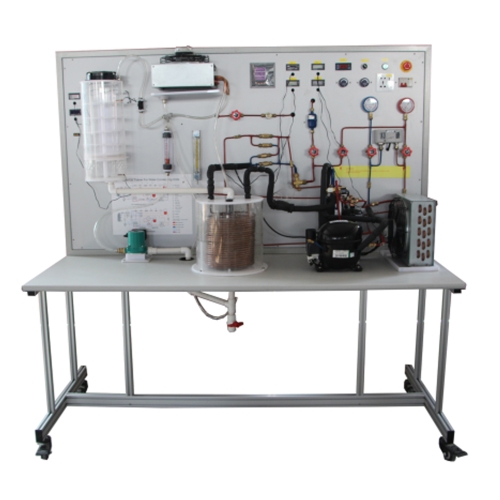
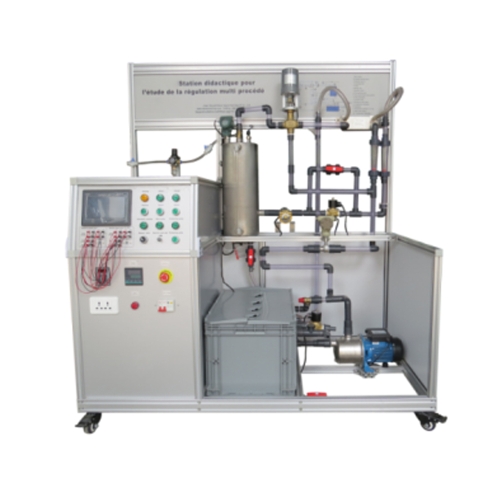
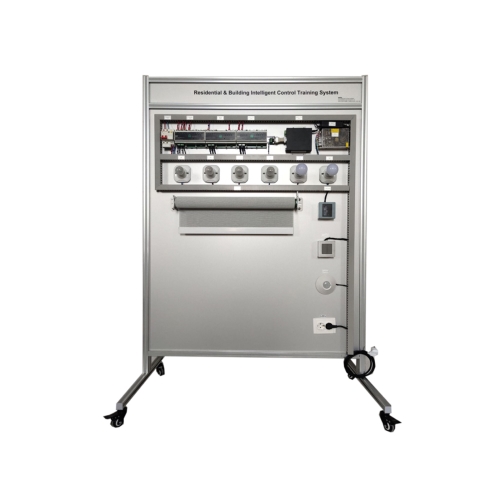
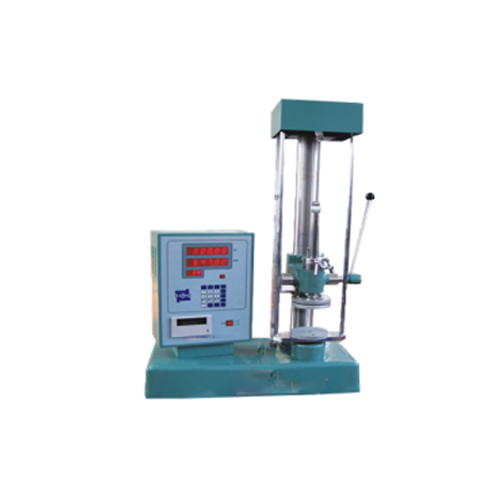
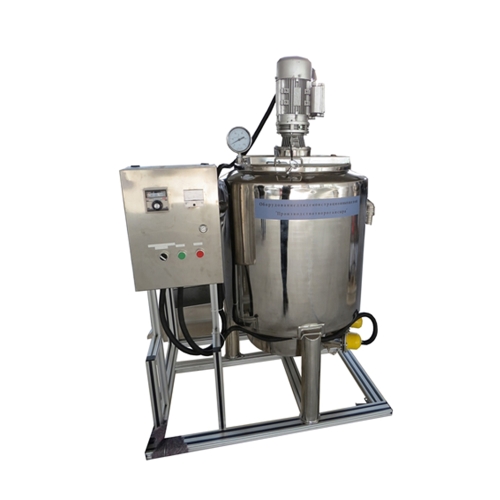
AFA079 Central Air Conditioner Trainer Didactic Equipment Vocational Training Equipment Refrigeration Training Equipment
1. Product Introduction
1.1 Product Description
The Central Air Conditioning Assessment and Training System uses a chiller unit with a stainless steel frame structure. A dedicated simulation room is provided for customer use. The simulation room utilizes existing space and employs a manifold and integrated unit to regulate the distribution of cooling or heating capacity. The entire central air conditioning system is controlled by a Mitsubishi FX2N-48MR (or CPU-226), a Siemens PLC programmable controller, and an industrial bus. A computer communicates with the PLC via a communication bus to control the operation of the central air conditioning system. Operating parameters are collected by various sensors and transmitted to the computer via the communication bus for real-time monitoring using dedicated central air conditioning control software. The configuration software requires that the system's equipment structure, control principles, and processes be displayed synchronously with animations.
1.2 Product Features
1. Complete System, Realistic Reproduction: The complete system includes the four core components of a central air conditioning system—the chiller unit system, cooling water system, chilled water system, and heating system (simulating a boiler and heating rods). The system structure and processes simulate real engineering applications, providing trainees with an immersive learning experience.
2. Intelligent Control, Advanced Technology: Utilizing an industrial-grade programmable logic controller (PLC) and touchscreen as the control core, combined with computer configuration and monitoring software, a typical industrial automation control system architecture is constructed. This reflects the modern trend of intelligent and networked central air conditioning systems.
3. Fault Simulation, Core Teaching Function: Built-in simulation functions for up to 15 typical faults, covering key components such as compressors, water pumps, fans, solenoid valves, and sensors. Students can systematically develop their fault diagnosis and resolution skills through the entire process of fault setting, phenomenon observation, diagnostic analysis, and reset recovery.
4. Dual-Mode Operation, Comprehensive Functions: Enables operation and switching between two basic modes: "cooling" and "heating," allowing students to fully grasp the system configuration, startup process, and operating characteristics of central air conditioning under different working conditions.
5. Visual Design, Intuitive and Clear: Key components such as the refrigeration system (sight glass, high and low pressure gauges) and water system (water flow indicator, manual valves) adopt a visual design, making their operating status immediately apparent. The electrical control circuit uses an open panel for easy observation and measurement by students.
6. Safety Assurance and Reliable Training: The equipment is designed with teaching safety in mind, featuring multiple safety measures including grounding protection, leakage protection, and overload protection. Key operations are equipped with electrical interlocks to prevent damage from misoperation, ensuring a safe and reliable training process.
7. Hardware and Software Integration for Remote Operation and Maintenance: Supports local touchscreen operation and remote computer monitoring, and can be expanded to use remote desktop and third-party remote control software (such as Sunflower). This aligns with current industrial realities of remote equipment management and maintenance, cultivating trainees' information technology skills.
2. Technical Specifications
2.1 Basic Technical Parameters
Power supply Three-phase five-wire 380V / 50Hz
Refrigerant R410
2.2 Equipment External Parameters
Electrical cabinet dimensions 600mm*600mm*1800mm
Electrical cabinet weight ≤50kg
Main body dimensions 6000mm*2400mm*2500mm
Main body weight ≤500kg
Computer desk dimensions 600mm*600mm*25mm
Computer desk weight ≤30kg
3. Product Introduction
3.1 Main Body of the Product
No. Name Quantity
1 Air conditioner indoor unit 1
2 Display controller 1
3 Air circulation duct 1
4 Simulated boiler 1
5 Water storage tank 2
6 Cooling tower 1
7 Boiler circulating water pump 1
8 Simulated boiler power supply 1
9 Circulating fan 1
10 Heating rod 2
11 Solenoid valve 2
12 Water storage bottle 1
13 Water tank motor 2
14 Expansion valve 1
15 Compressor 1
16 Compressor starting capacitor 1
17 High and low pressure gauges 1
18 Liquid receiver 1
19 Cooling tower motor 2
20 Condenser 1
21 Electrical cabinet 1
22 Computer desk 1
3.2 Product Accessories
No. Name Quantity
1 Toolbox 1
2 Multimeter 1
3 Adjustable wrench 3
4 PVC flexible hose 1
5 USB flash drive 1
6 Pipe clamp 10
7 Network cable 1
8 European-style socket 1
4. Product Teaching Experiment List
(1) Heating Mode Operation
(2) Cooling Mode Operation
(3) Remote Computer Control
(4) F1 - Compressor Fault Experiment
(5) F2 - 1 Hot Water Cooling Pump Fault
(6) F3 - 2 Hot Water Cooling Pump Fault
(7) F4 - 1 Chilled Water Pump Fault Experiment
(8) F5 - 2 Chilled Water Pump Fault Experiment
(9) F6 - Boiler Fault Experiment
(10) F7 - Cooling Tower Fan Fault Experiment
(11) F8 - Solenoid Valve Liquid Supply Experiment Fault
(12) F9 - Solenoid Valve 1 Water Circuit Fault Experiment
(13) F10 - Solenoid Valve 2 Water Circuit Fault Experiment
(14) F11 - Axial Flow Fan Fault Experiment
(15) F12 - Hot Water Pump Circulation Fault Experiment
(16) F13 - Heating Rod 1 Fault Experiment
(17) F14 - Heating Rod 2 Fault Experiment
(18) F15 - Mode Selection Fault Experiment



 Login
Login  Inquiry List